

Erbil, Kurdistan Region of IraqNursing and Midwifery Development Centre
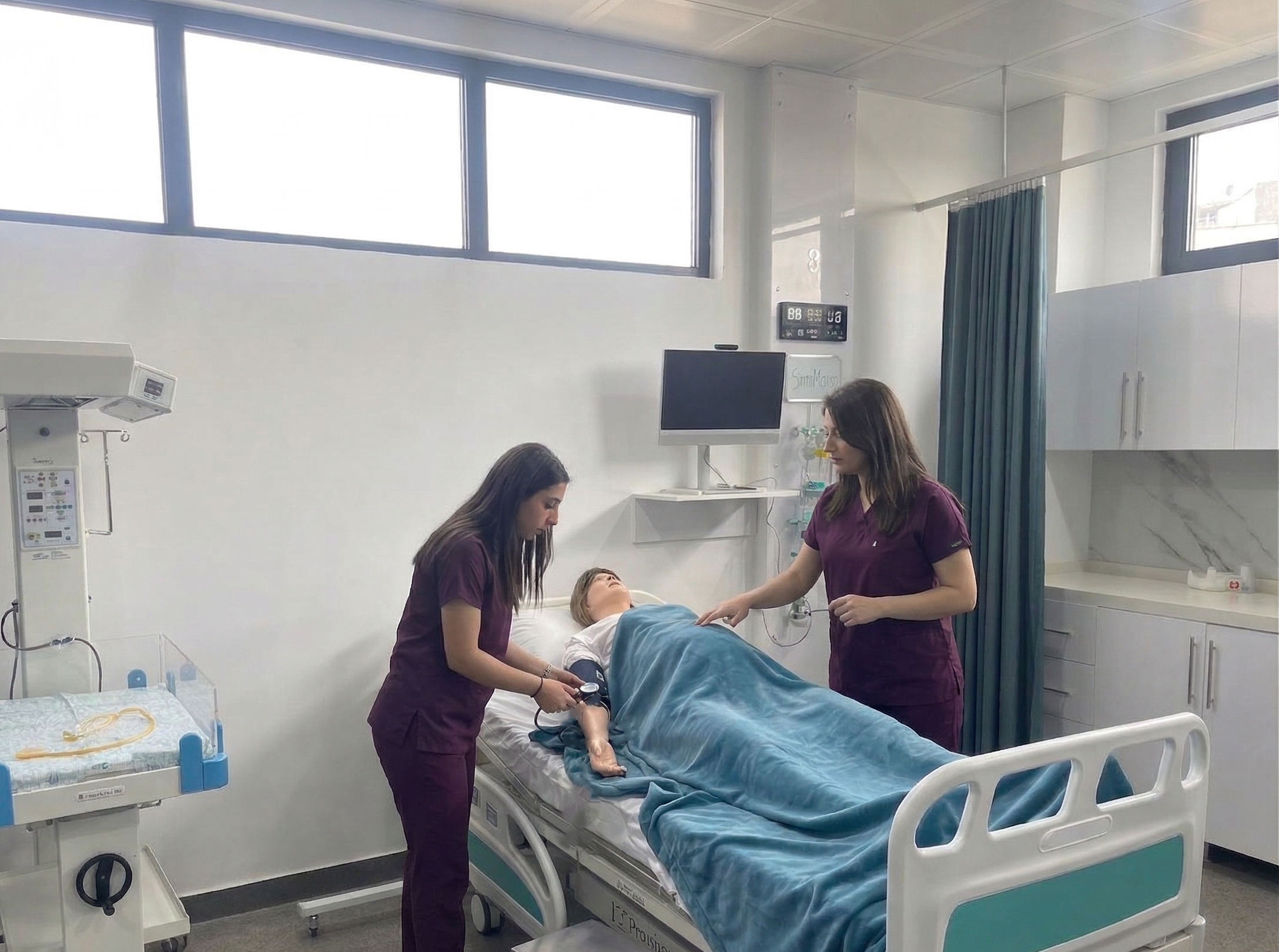
The Nursing and Midwifery Development Center:
Where life-saving training happens
Frequently Asked Questions
-
The Nursing & Midwifery Development Centre (NMDC) is a non-governmental organization based in Erbil, Kurdistan Region of Iraq. It provides continuing professional development (CPD) courses for nurses, midwives, and other healthcare professionals through a purpose-built, 36,000 square-foot simulation and training facility.
With 11 high-fidelity simulation laboratories and capacity to train up to 7,000 professionals annually, the NMDC is designed to strengthen the clinical skills of the existing healthcare workforce—particularly those working in maternal and newborn care.
-
Iraq has achieved high levels of childbirth within facilities, with approximately 96% of births attended by health personnel. However, maternal and neonatal mortality remain elevated. This indicates that the primary challenge is not access to care, but quality, consistency, and emergency readiness at the point of care.
Neonatal mortality rates in Iraq: ~21 deaths per 1,000 births - more than triple that of the U.S. (World Bank)
Maternal mortality rates in Iraq: 66 women die per 100,000 live births due to pregnancy-related causes in Iraq (World Bank)
The absence of trained attendants who provide the necessary care for babies is the leading cause of newborn death in low- and middle-income countries, such as Iraq (WHO).
Iraq's healthcare system, once among the region's strongest, has been severely impacted by decades of conflict, sanctions, and underinvestment. Many facilities lack basic equipment and experience frequent supply shortages. The country faces critical healthcare workforce challenges, with an estimated 70% of doctors having left since 2003. Security concerns continue to limit access to antenatal care in some regions, with women reducing facility visits to minimize travel risks. (Quoted from the Healthy Newborn Network)
-
NMDC focuses on upgrading frontline providers through high-fidelity simulation (HFS) and evidence-based training programs.
-
High-fidelity simulation (HFS) recreates real clinical emergencies using advanced, robotic mannequins with lifelike skin and internal sensors. HFS enables clinicians to practice rare, high-risk scenarios repeatedly in a zero-risk environment, allowing nurses and midwives to master life-saving skills before ever working with a real patient.
-
The NMDC mannequins are advanced, robotic, and human-like, with lifelike skin and internal sensors that:
Breathe, bleed, and respond physiologically to treatment
Deteriorate or stabilize based on clinical decisions
Allow full-team practice of emergencies such as:
Neonatal resuscitation
Postpartum hemorrhage
Shoulder dystocia
Maternal cardiac arrest
-
Simulation-based training is widely used in obstetrics and emergency medicine because it improves both provider performance and patient outcomes.
Reduction in adverse outcomes: Simulation-based obstetric training has been associated with reductions in composite adverse maternal outcomes (such as postpartum hemorrhage requiring transfusion) from 6.9% to 3.8% (National Library of Medicine).
Reduction in Neonatal Injury: Large-scale trials have shown that simulation training for obstetric emergencies (like shoulder dystocia or neonatal resuscitation) can reduce permanent neonatal injury rates by 50% (National Library of Medicine; EMS Blog).
Improved clinical performance: Research shows that simulation-based training can drop clinical error rates from 30.9% down to just 4.4% in high-stakes environments (Brown University).
-
NMDC provides hands-on simulation programs for nurses and midwives, including:
Helping Babies Breathe (HBB): An evidence-based program from the American Academy of Pediatrics (AAP) that teaches essential newborn resuscitation skills to reduce neonatal deaths, especially in low-resource settings (American Academy of Pediatrics).
Essential Care for Every Baby (ECEB): Another AAP program that focuses on immediate newborn care practices such as keeping babies warm, skin-to-skin contact, early breastfeeding, and infection prevention (American Academy of Pediatrics).
For a complete list of courses offered at the NMDC, click here.
-
The World Health Organization (WHO) estimates that over 80% of maternal deaths, stillbirths, and neonatal deaths are preventable with high-quality midwifery care delivered to international standards (WHO Midwifery Ed Framework; WHO Maternal Health; The Lancet).
Some outcomes of courses offered at the NMDC:
Helping Babies Breathe (HBB)
~56% reduction in infant mortality rate in the first 24 hours after birth
~57% reduction in stillbirths
Proven impact in Nepal and other low-resource settings (LDS Study in Nepal; HBB)
Essential Care for Every Baby (ECEB)
Only 2.5% of nurses had mastery of ECEB skills before training
85% of nurses achieved mastery after completing the course at NMDC (Study of NMDC)
-
NMDC strengthens healthcare across the region, not just for mothers and babies. As a certified American Heart Association training center, we offer Basic and Advanced Life Support programs, equipping nurses, midwives, and emergency responders—including the Peshmerga—with essential life-saving skills. We are also expanding into additional areas of nursing and healthcare, multiplying the impact of every trained professional.
For a complete list of courses offered at the NMDC, click here.
-
The Nursing and Midwifery Development Foundation (NMDF), a U.S.-based 501(c)(3), supports the NMDC’s work by fundraising to cover the facility’s operating costs.
-
It costs just $30 to train one nurse or midwife in NMDC simulation-based programs, equipping them with skills to improve maternal and newborn care.
$60 trains 2 nurses or midwives
$600 trains 20 nurses or midwives
$1000 trains equips 35 nurses or midwives
Click here to make a donation.