
Why Iraq? The Frontline of Maternal Health
From Excellence to Exodus and the Path Back to Hope
The Forgotten Legacy In the 1980s, Iraq was the beacon of healthcare in the Middle East. It was the regional center for medical excellence, boasting some of the most advanced hospitals and the best-trained physicians and nurses in the world.
But decades of tragedy changed everything.
The 1990s: Harsh sanctions decimated the supply chains, leaving hospitals without basic medicine.
2003 & Beyond: The invasion and subsequent years of conflict turned hospitals into targets.
The Rise of ISIS: Further instability fractured a system that was already on its knees.
The Great Exodus: Who cares for the 28 million? Imagine a country of 28 million people—roughly the size of Texas—losing 75% of its medical professionals. Following the 2003 invasion, a massive exodus of healthcare workers began. Targeted by violence and lacking security, thousands of doctors and pharmacists fled. For nurses, the impact was catastrophic. It is estimated that only 15,000 nurses remained to serve the entire nation.
The Reality: In many areas, there are only 12 nurses for every 10,000 residents. The weight of an entire nation’s health was left on the shoulders of the few who stayed.
The Gap Between Access and Survival
In Iraq today, the problem isn't necessarily getting to a hospital—most mothers give birth in healthcare facilities. The problem is what happens once they are there.
Because the system was weakened by decades of underinvestment, the nurses and midwives who remain are often forced to manage life-threatening complications without the modern training they need.
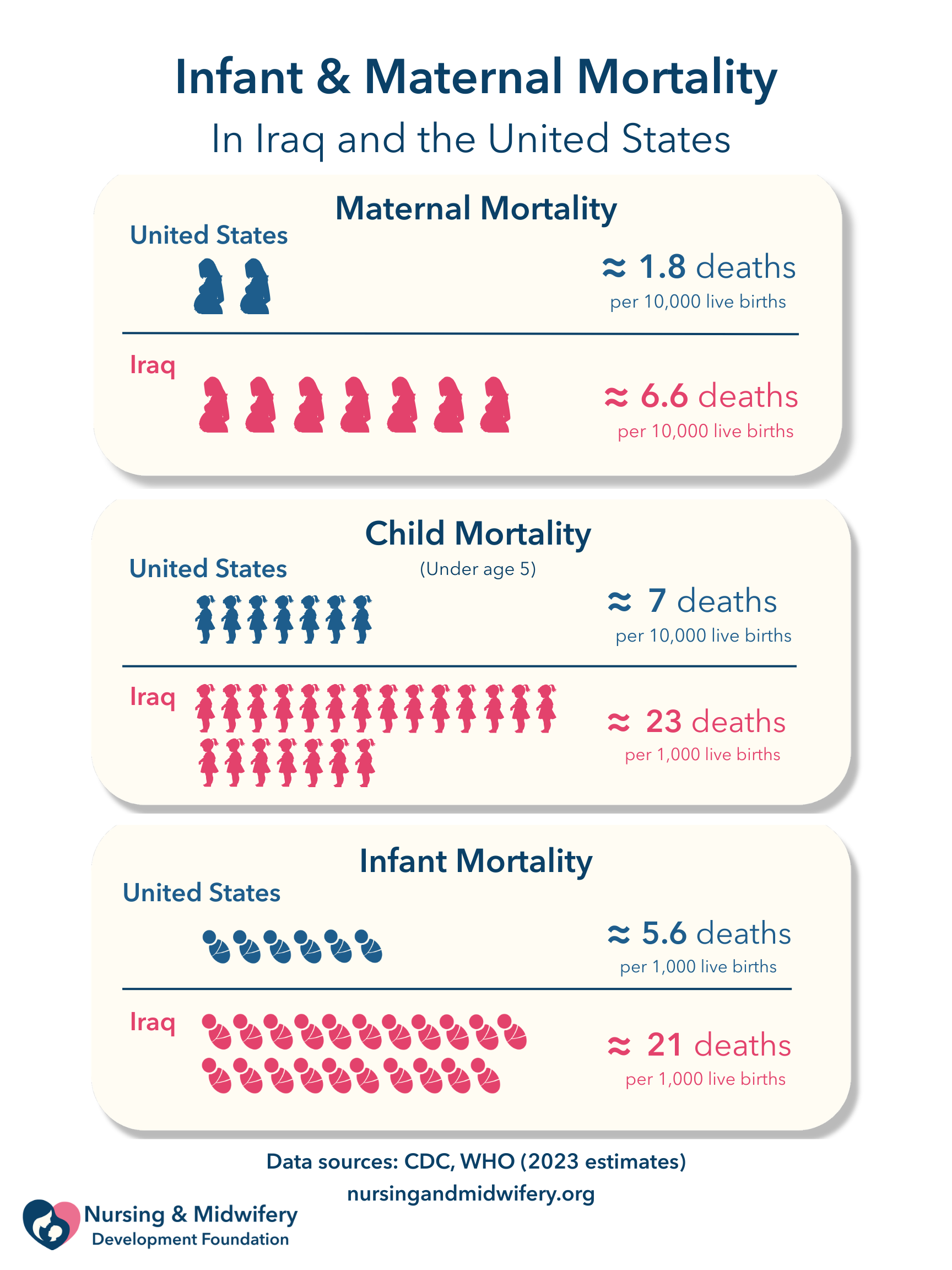
21 newborns out of every 1,000 births do not survive.
66 mothers out of every 100,000 die from causes that are almost entirely preventable.
When a mother begins to hemorrhage or a baby cannot breathe, training is the deciding factor between a celebration and a funeral.
The NMDC: A Modern Beacon
We believe that the way to honor the nurses and midwives who stayed is to give them the world-class skills they need to lead.
The Nursing and Midwifery Development Centre (NMDC) was built to close this gap. Its state-of-the-art facility provides nurses and midwives the professional development they need to save mothers and babies.
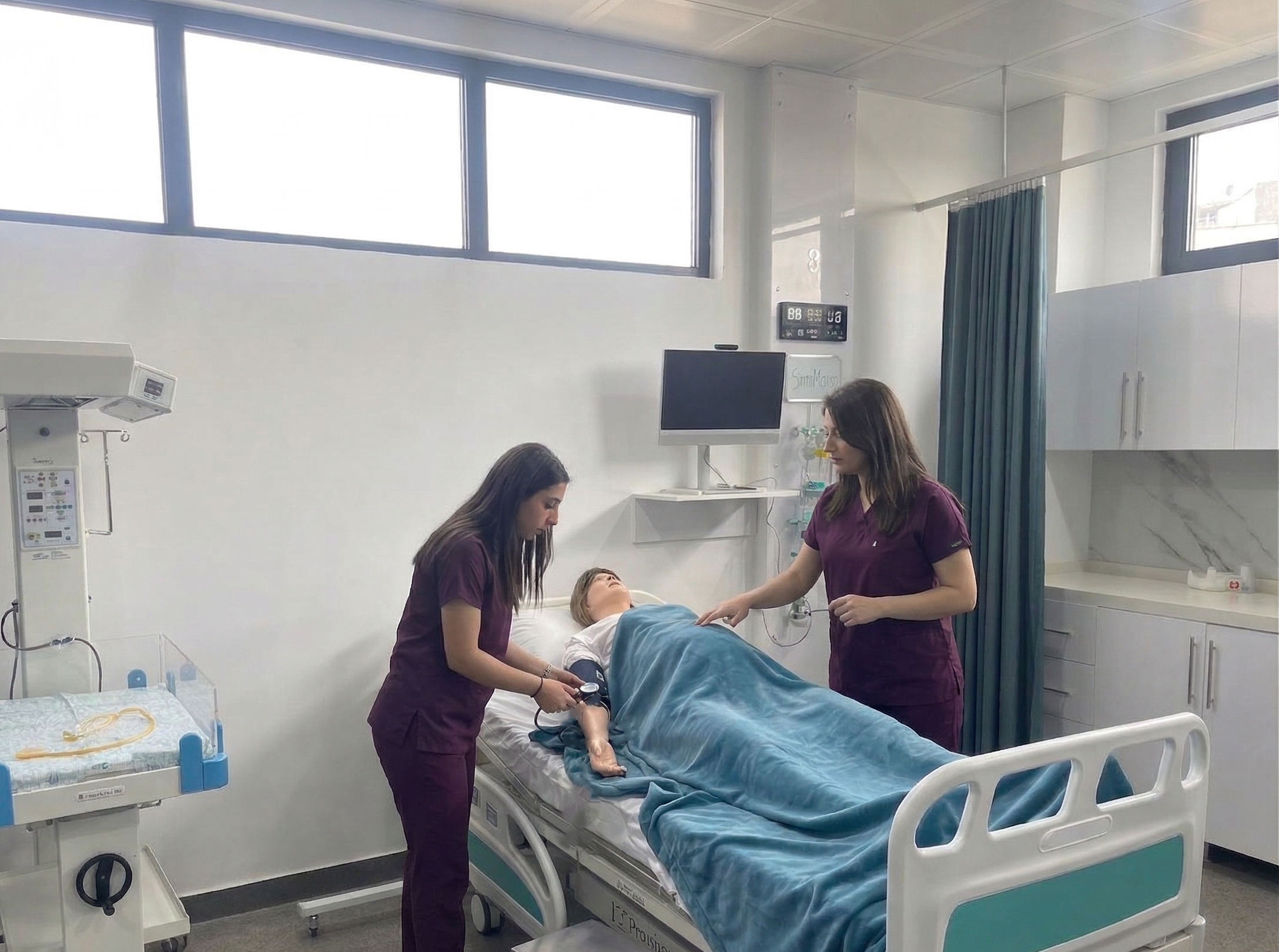
Through our 11 high-fidelity simulation labs, we use technology to save lives:
Realistic Simulators: Our mannequins breathe, bleed, and respond to treatment, allowing midwives to practice for a hemorrhage before they face one in a delivery room.
The Aviation Model: Much like pilots in flight simulators, our providers build rapid decision-making skills and teamwork under pressure in a zero-risk environment.
Scaling Impact: With the capacity to train 7,000 healthcare professionals every year, we aren't just helping individuals; we are strengthening the entire healthcare workforce of a nation.
You are the bridge to a safer birth.
The NMDF ensures this facility has the funding, the educators , and the support to keep its doors open.
Iraq used to be the center of healthcare. With your help, the nurses and midwives of Iraq can lead the way once again.